
Premier League Schedule Explained: Full Season Fixtures and Key Dates
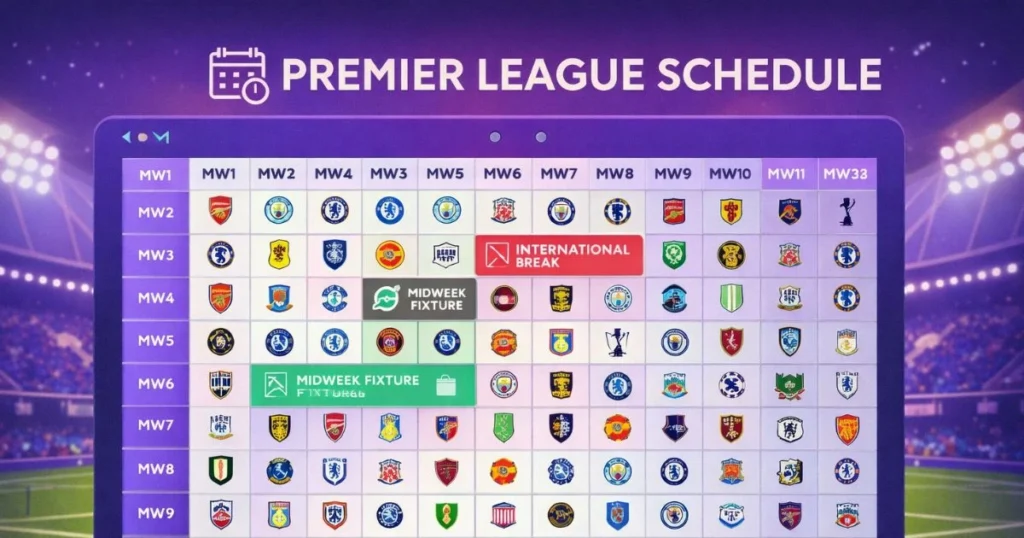
Table of Contents
What Is the Premier League Schedule?
The Premier League schedule is the official fixture list that outlines every match played during a Premier League season. It includes all 20 clubs, matchweeks, kick-off windows, and key calendar periods such as international breaks and cup interruptions.
For football fans and Fantasy Premier League (FPL) managers, understanding the English Premier League schedule is essential for tracking team form, planning transfers, and anticipating rotation during busy periods.
How the English Premier League Schedule Is Structured
The Premier League season follows a balanced league format:
- 20 teams
- 38 matchweeks
- Each team plays every other team twice (home and away)
- 380 matches total in a season
Fixtures are spread across weekends, midweek rounds, and selected holiday periods, making schedule awareness crucial throughout the campaign.
When the Premier League Schedule Is Released
The Premier League fixture list is usually released before the season starts, allowing clubs, broadcasters, and fans to plan ahead.
Once released, fixtures may still change due to:
- Television scheduling
- Domestic cup competitions
- European commitments
- Weather or unforeseen events
Because of this, fans should always check for updates rather than relying solely on the initial release.
Key Dates in the Premier League Schedule
While exact dates vary each season, every Premier League calendar follows similar phases.
Season Start
The campaign begins in late summer, with opening fixtures spread across a weekend.
International Breaks
Several breaks occur during the season, pausing league action for international matches. These breaks often affect momentum and squad fitness.
Festive Fixture Period
One of the most intense parts of the Premier League schedule, featuring:
- Short recovery times
- Increased rotation
- Higher injury risk
This period is especially important for FPL planning.
Midweek Matchweeks
Some rounds are scheduled midweek to fit all fixtures into the season calendar.
Season Run-In
The final matchweeks decide:
- Title races
- European qualification
- Relegation battles
These weeks are often the most unpredictable.
Why the Premier League Schedule Matters for Fantasy Premier League
For FPL managers, the English Premier League schedule directly influences strategy.
Fixture Difficulty
Teams with easier runs often attract more transfers in, while tough schedules can lead to sell-offs.
Rotation Risk
Busy periods increase rotation, especially for clubs involved in European competitions.
Double and Blank Gameweeks
Schedule changes can create:
- Double Gameweeks (teams play twice)
- Blank Gameweeks (teams do not play)
These weeks are critical for chip usage like Wildcards and Bench Boost.
How to Use the Premier League Schedule Effectively
Plan Transfers Ahead
Looking several matchweeks ahead helps avoid short-term decisions that hurt long-term points.
Track Fixture Swings
Target teams entering favorable runs rather than reacting after points are already scored.
Monitor Schedule Changes
Postponed fixtures can reshape FPL strategies quickly, especially later in the season.
Home vs Away Fixtures in the Schedule
Not all fixtures are equal.
- Some teams perform significantly better at home
- Away fixtures can reduce clean sheet and goal potential
- Back-to-back away matches increase fatigue
Factoring venue into your planning improves decision-making.
Television Scheduling and Fixture Changes
Televised matches often lead to:
- Changed kick-off times
- Matches moved to different days
- Late confirmation of schedules
This is why it’s important to revisit the Premier League schedule weekly rather than assuming fixtures remain fixed.
How the Schedule Affects Player Fitness and Injuries
Congested schedules increase:
- Muscle injuries
- Rotation risk
- Reduced minutes for key players
Managers often rest players strategically, especially during tight runs of fixtures.
Premier League Schedule and Title Races
The order of fixtures can influence:
- Momentum during the season
- Pressure in final matchweeks
- Difficulty of run-ins for top clubs
Teams facing stronger opponents late in the season often struggle more than those with favorable closing schedules.
Common Myths About the Premier League Schedule
“All teams have equal difficulty”
While everyone plays each other twice, fixture order matters greatly.
“Early fixtures don’t matter”
Early results shape confidence, transfers, and long-term strategy.
“The schedule never changes”
In reality, fixture movement is common throughout the season.
Frequently Asked Questions
How many matchweeks are in a Premier League season?
There are 38 matchweeks.
Can fixtures change after release?
Yes. Broadcast and cup competitions regularly cause changes.
Why do some teams have blank gameweeks?
Fixture postponements usually cause blanks.
How far ahead should I plan?
Most managers plan 4–6 matchweeks ahead for best results.
Final Thoughts
The Premier League schedule is more than just a list of fixtures it’s a strategic roadmap for fans and Fantasy Premier League managers alike. Understanding how the season is structured, when key periods occur, and how fixtures shift gives you a clear advantage.
By regularly checking the English Premier League schedule, you can stay prepared for fixture swings, manage player rotation, and make smarter long-term decisions throughout the season.